Grain-Free Dog Food
As a dog owner, it can be overwhelming; supermarket shelves are packed with bags of dog food. The labels don’t make it any easier; complicated terms are everywhere. Choosing the right food for your (sensitive) four-legged friend can be challenging.
How to Recognize Quality Dog Food?
So, what should you actually look for? Believe us, it’s simpler than you think; it all comes down to high-quality ingredients. Dry and wet food should contain the following nutrients: a high meat or fish content, fats, carbohydrates, vitamins, and minerals.
Are Grains Bad for Dogs?
Unfortunately, the misconception that grains are bad for dogs still exists. However, this is not necessarily true. When grains are properly pre-cooked and broken down, food with grains (of good quality) — in the right amount — is harmless. Despite this knowledge, most dog food in supermarket shelves still contains too many low-quality grains.
What Are the Consequences of Dog Food with a Lot of Grains?
If your dog consumes too many grains (of poor quality), digestibility can significantly decrease. Moreover, it is becoming increasingly common for dogs to react (over)sensitively to grains. This shows up as unpleasant symptoms such as skin irritations, digestive and stomach issues, hair loss, and itching. Grain-free dog food can help prevent or reduce these complaints. As the term suggests, grain-free dog food contains no grains.
What Is Meant by Grain-Free Dog Food?
Cheap dog food contains a lot of low-quality grains for one reason only: to unnecessarily fill the kibble and keep the price as low as possible. Unfortunately, this comes at the expense of quality, as grains (of poor quality) do not provide energy to your furry friend. Because grain-free dog food contains no grains, there is more room for high-quality ingredients — such as (animal) proteins — that do provide energy. Your dog is also better able to digest grain-free kibble, resulting in less stool.
Most Common Grains in Dog Food
To help you recognize the most common grains in dog food, we list them below:
- Wheat
- Rice
- Corn
- Barley
- Oats
- Rye
Which Alternative Carbohydrate Sources Are Used in Grain-Free Dog Food?
To provide your dog with enough energy — besides (animal) proteins — grains are replaced by alternative carbohydrate sources such as potatoes, pumpkin, lentils, peas, broad beans, or sweet potato (batata).
What About Gluten in Dog Food?
Not only humans but also dogs can be sensitive to gluten. The term ‘gluten’ refers to a group of proteins found in the endosperm of grains (for example, rice). Since grains largely consist of gluten, grain-free dog food is automatically gluten-free as well.
What Are the Benefits of Grain-Free Dog Food?
There are several reasons to choose grain-free dog food, which we list below:
- Lower risk of allergies
- Better digestibility
- Generally contains more (animal) proteins
- Lower risk of itching, hair loss, stomach, and intestinal problems
- Gives your dog more energy
- Less stool
Prima Diervoeding Stands for Quality Dog Food
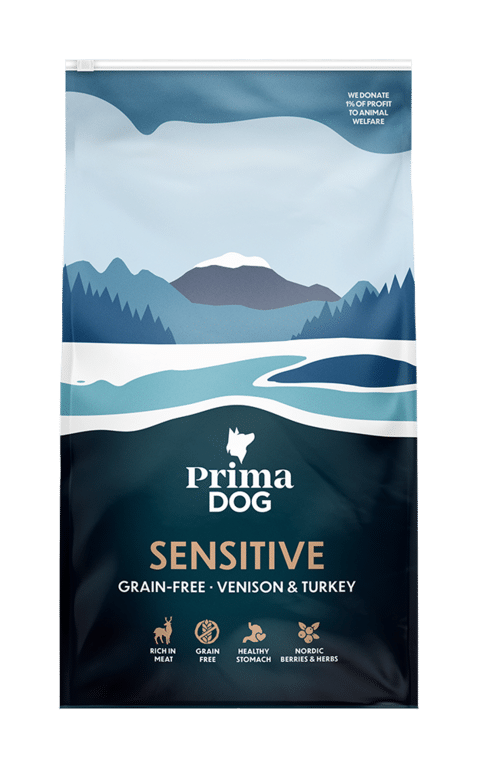
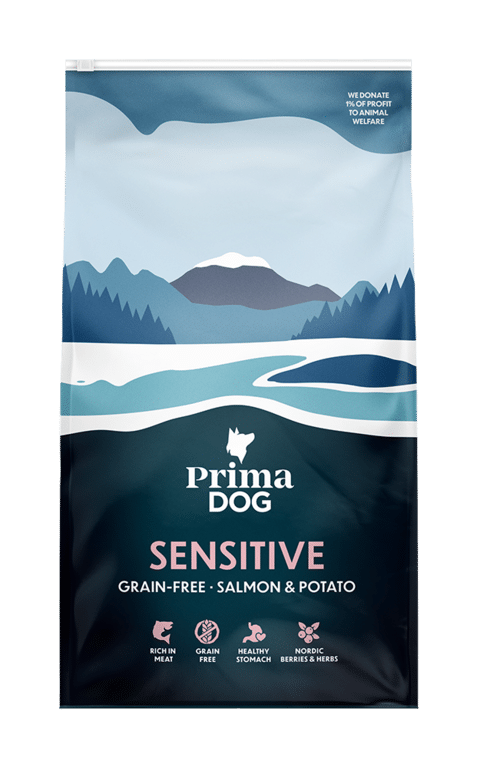
At Prima Diervoeding, you can choose from both grain-reduced and grain-free dog food. Our foods contain (animal) proteins as the main ingredient, including venison, turkey, chicken, salmon, lamb, and duck. Besides a high meat or fish content, your dog can count on the right amount of fats, carbohydrates, vitamins, and minerals. In other words, complete, healthy dog meals without unnecessary fillers. And all that at an affordable price!