All About Grain-Free Dog Kibble
Supermarket shelves are full of dog food; it’s no wonder you can’t see the forest for the trees. The label doesn’t help much either, so how do you know if you’re making the right choice? Do you choose a specific type of meat or go for a
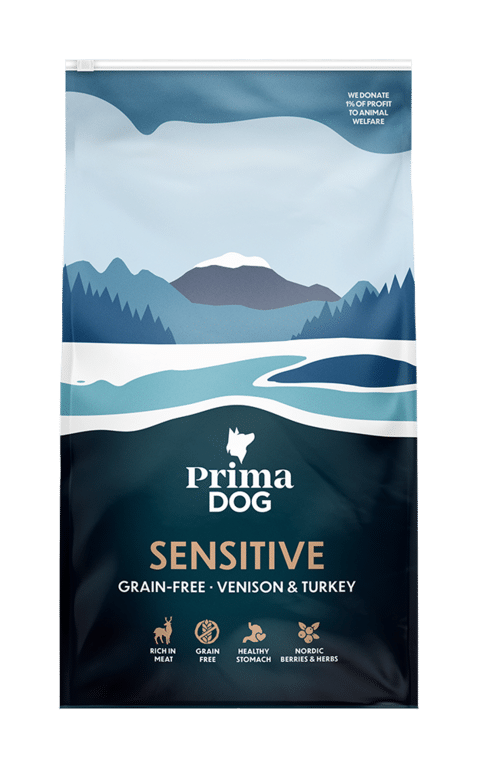
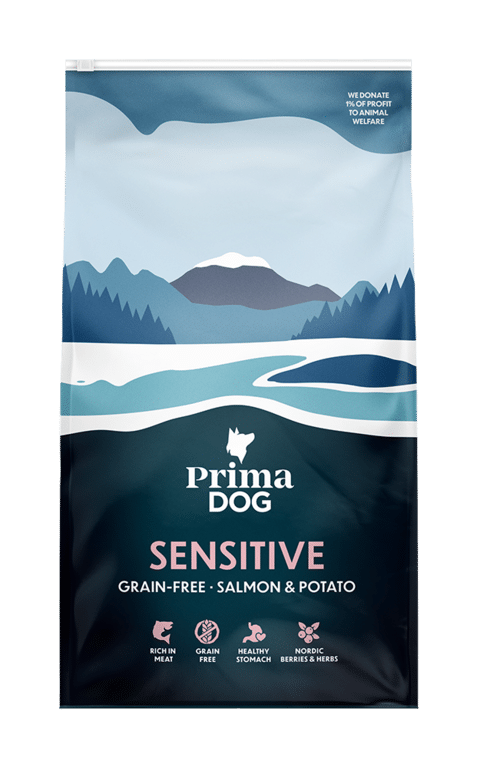
grain-free dog kibble?
To help you along, we explain more below about quality dog food and the benefits of grain-free nutrition.
What Should Quality Dog Food Meet?
Your four-legged friend’s health depends on healthy dog food. To provide your rascal with a healthy dog meal, quality ingredients are essential.
Although your furry foodie benefits greatly from healthy food, that doesn’t mean your dog can never get sick.
Animal Proteins
Although dogs are naturally omnivores, they love to feast on meat. Moreover, our furry friends are well able to digest animal proteins. You understand that a high meat or fish content should not be missing in the composition. Animal proteins contribute to strong muscles, healthy organs, and a healthy nervous system.
At Prima Diervoeding, we also advocate for a high meat or fish content. Our motto is not for nothing: more meat, less grains.
Other Nutrients
However, it’s not just about a high meat or fish content; quality
dog food must also contain sufficient fats, carbohydrates, minerals, and vitamins. These contribute to clear eyesight, strong bones, and good heart function.
For a healthy diet, dog food should not contain artificial preservatives; instead, vitamin C and vitamin E are often used as natural alternatives.
At Prima Diervoeding, we strive for a world full of healthy and happy dogs. That’s why we only use quality ingredients that make dog owners and their furry friends happy!
Are Grains Really as Bad as They Say?
The answer is not that simple; grains are not automatically bad for your dog. It is important that the grains are well pre-cooked and broken down. Moreover, dog food should not contain too many grains; the right amount is essential.
Can you assume this is the case with every dog food brand? Nope! Unfortunately, food with too many low-quality grains is still sold. So make sure you read the label carefully or choose a grain-free dog kibble.
Can Your Dog Get Complaints from Too Many Grains?
Sensitive or allergic dogs can quickly suffer from (too many) grains. Even good quality grains can cause unpleasant complaints. Digestion can be disrupted, but other complaints—such as skin irritations, itching, hair loss, stomach and intestinal problems—can also occur.
Fortunately, you can prevent these unpleasant ailments with a grain-free kibble.
What Does a Grain-Free Dog Kibble Mean?
To cut costs, some manufacturers still put too many grains (of poor quality) in dog food. They don’t consider your rascal’s nutritional needs; the grains only serve as fillers. Unfortunately, these grains give your four-legged friend no energy at all.
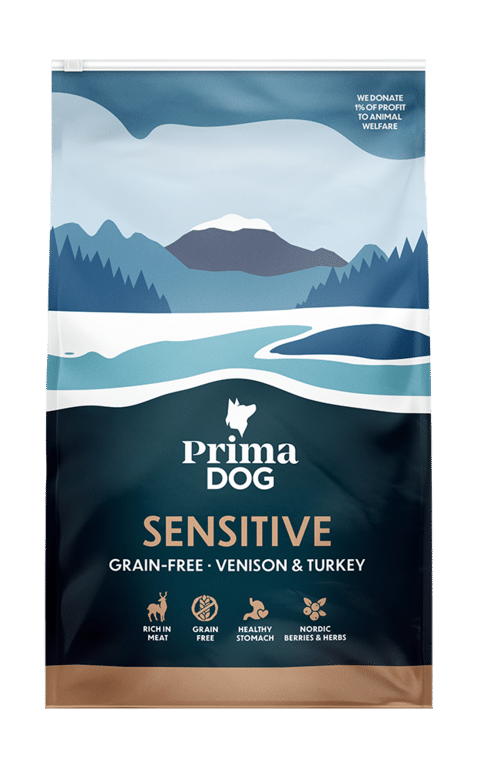
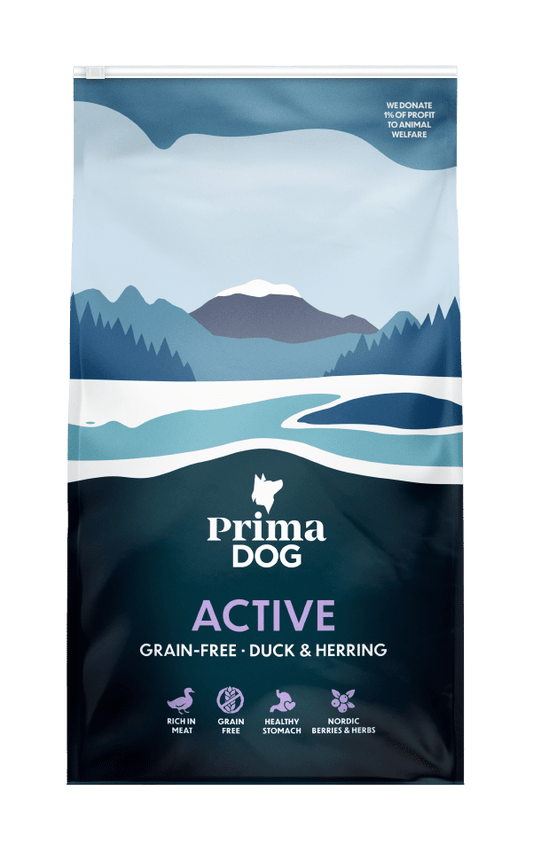
Fortunately, there is such a thing as grain-free dog food. The name says it all; this type of food is free of grains. This leaves more room for quality ingredients, such as animal proteins. This in turn also ensures better digestion and stool quality.
Are you looking for a grain-free dog kibble? Feel free to take a look in our webshop; here you’ll find plenty of grain-free options!
Which Grains Are Most Common in Dog Food?
Below we have listed the most common grains in dog food:
- Wheat
- Rice
- Oats
- Barley
- Corn
- Rye
What Alternative Is Used for Grains?
As an alternative, the grains in a grain-free dog kibble are replaced by alternative carbohydrate sources, such as peas, potatoes, lentils, pumpkin, sweet potato (bataat), or broad beans.
What Should You Know About Gluten?
Your four-legged friend can—just like you—react sensitively to gluten. But what actually causes this? It’s important to know that the term ‘gluten’ automatically refers to a group of proteins found in the endosperm of grains (for example, rice). Since grains are the only source of gluten, a grain-free dog kibble is automatically gluten-free as well.
Why Choose a Grain-Free Dog Kibble?
To answer the question ‘why should you choose grain-free dog food,’ we list the benefits below:
- Improved digestion
- Less risk of allergies
- Often more animal proteins
- Less chance of hair loss, itching, and stomach and intestinal problems
- Gives your dog more energy
- Less stool
The Range of Prima Diervoeding
Besides grain-free dog kibbles, you can also choose from hypoallergenic kibbles and
wet food. To complete the assortment, various
dog snacks have been added. From trainers,
dried dog snacks to chew snacks; there is something for every four-legged friend. In short, a diverse and affordable range of healthy dry food, pouches with wet food, and irresistible dog snacks.