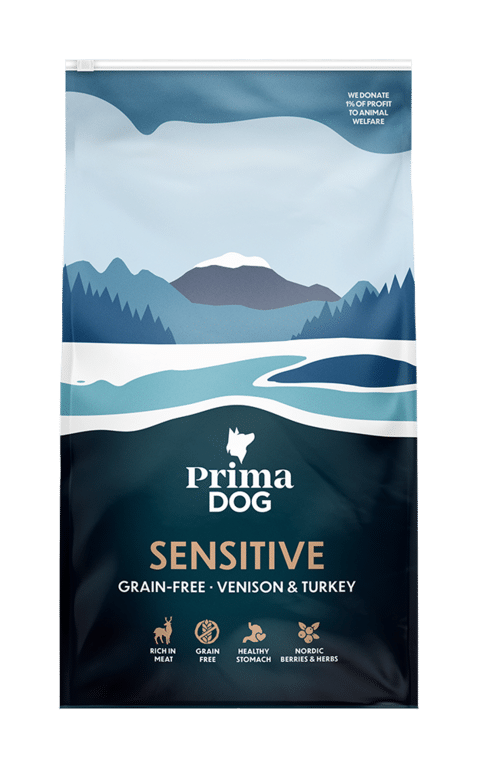
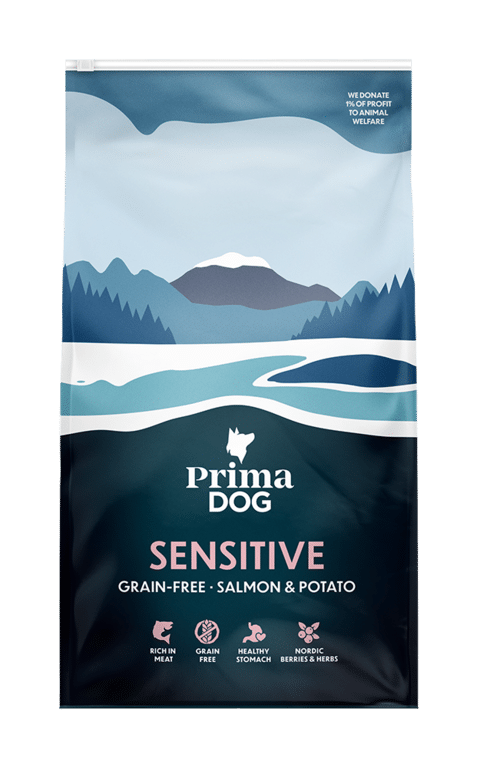
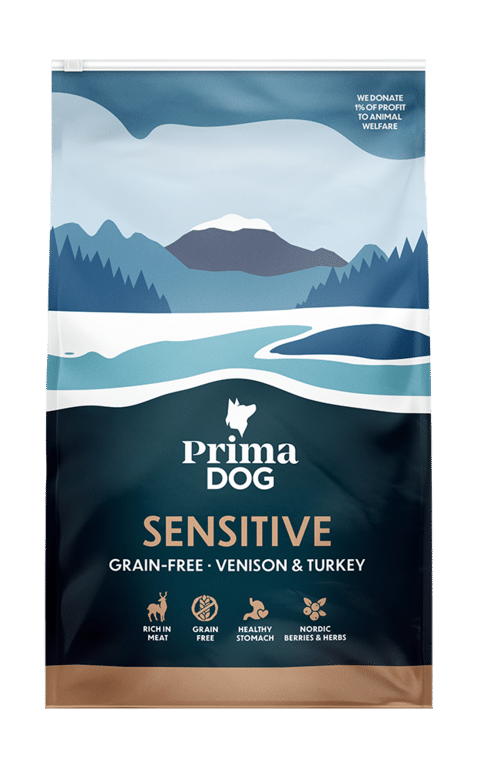
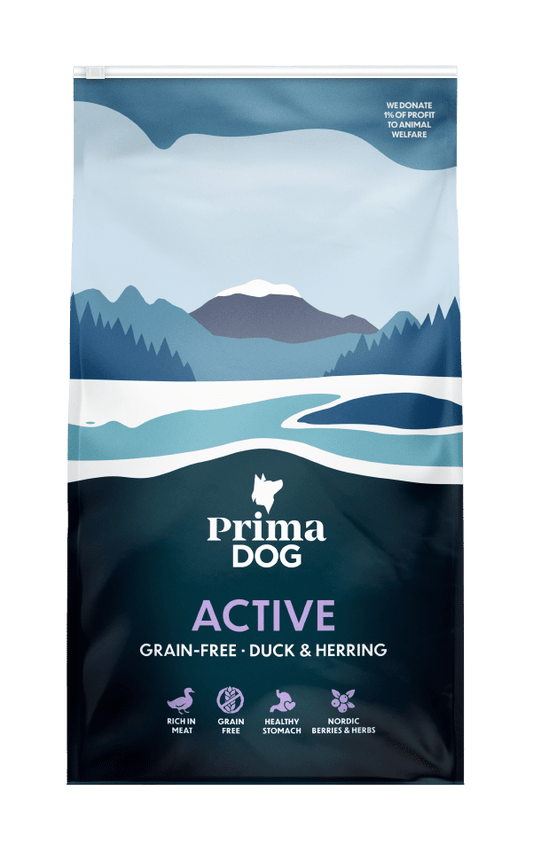
Grain-Free Dog Kibble
Making the right nutritional choice for your dog is becoming increasingly difficult; the supermarket is packed with dog food from various brands. Therefore, you would expect the label to give you more clarity, but even there, complicated terms fly at you. It's completely understandable that you no longer know what’s best.
What do we mean by quality dog food?
To provide your four-legged friend with a tasty and, above all, healthy dog meal, we explain which nutrients are important. We start with a high meat or fish content. Our furry friends are originally omnivores, but they are true carnivores nonetheless. Proteins — among other things — help maintain strong muscles, healthy organs, and the nervous system. Fats, carbohydrates, vitamins, and minerals in the right amounts should also not be missing.
Can grains be harmful?
Some context is needed when assuming grains are bad for dogs. Grains do not necessarily have to be bad, provided they are well pre-cooked and broken down and added in the right amount to dog food. Unfortunately, we still often see dog food offered with too many grains of poor quality. So read the label carefully or, even better, consciously choose
grain-free dog kibble.
What happens if your dog eats too many grains?
Now you might wonder: what are the consequences if my dog eats food with too many grains (of poor quality)? The answer is simple; digestion can become disrupted, and your allergic or sensitive four-legged friend may suffer from unpleasant complaints such as skin irritations, intestinal and stomach issues, itching, and hair loss. Very unpleasant, of course. But did you know you can reduce or even prevent these complaints with grain-free kibble? At
Prima Diervoeding, you can also find grain-free dog food. This way, your dog can enjoy a healthy and tasty meal!
What is grain-free dog kibble?
Many manufacturers still include too many grains (of poor quality) in dog food. This is done to keep costs low; the grains serve only as fillers. In other words, the nutritional needs of your dog are not considered. Your furry friend then gets no energy from these grains.
As the name suggests, grain-free kibble contains no grains. This leaves more room to add quality ingredients. For this reason, the meat or fish content in grain-free dog food is often higher; a significant energy booster for your dog! Other additional benefits include better digestion, resulting in less stool.
Want to relieve your four-legged friend’s allergic complaints? Try Prima Diervoeding’s grain-free kibble now.
What are the most common grains in dog kibble?
How do you recognize the most common grains in dog food? To help you out, we have listed them below:
- Rice
- Wheat
- Oats
- Corn
- Barley
- Rye
What replaces grains in grain-free dog kibble?
In grain-free dog kibble, grains are replaced by an alternative carbohydrate source. Think of pumpkin, peas, potatoes, lentils, sweet potato (bataat), or broad beans.
Are gluten and grains the same?
Did you know that not only people but also dogs can react sensitively to gluten? Grains consist largely of gluten. The term ‘gluten’ refers to a group of proteins found in the endosperm of grains (for example, rice). Therefore, grain-free dog kibble is automatically gluten-free as well.
The benefits of grain-free dog kibble
To summarize the benefits of grain-free dog food once again, we have listed them below:
- Better digestion
- Less chance of allergies
- Often a higher meat or fish content
- Reduced risk of itching, hair loss, stomach, and intestinal problems
- Provides more energy
- Less stool
Quality dog food from Prima Diervoeding
At Prima Diervoeding, the quality of our dry and
wet food is paramount. We ensure that our foods contain high-quality ingredients — such as (animal) proteins, fats, carbohydrates, minerals, and vitamins. You also have the choice between grain-reduced and grain-free kibble. In short, plenty of options for complete, healthy, and tasty dog meals without unnecessary fillers. Moreover, our range suits every budget.