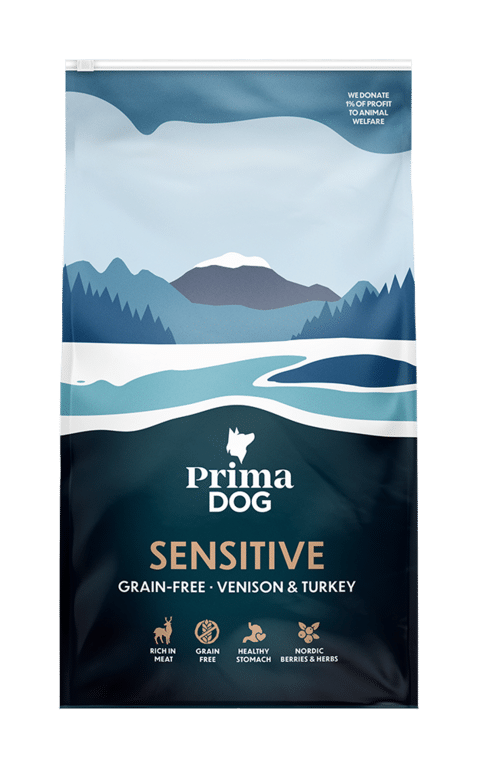
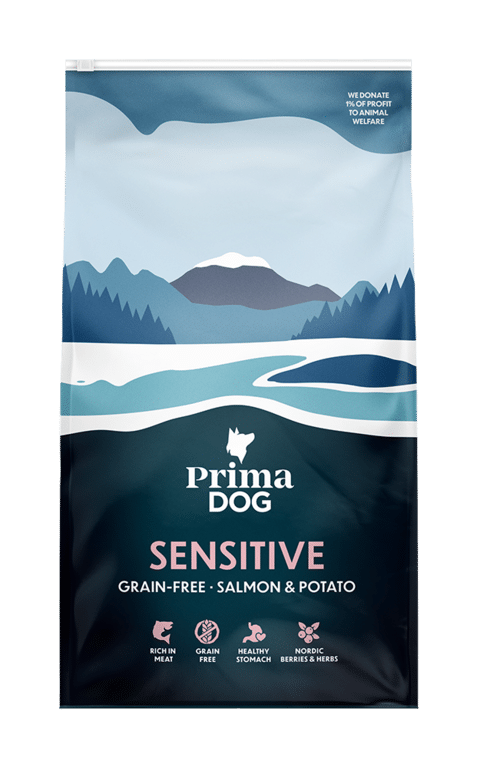
Choose a grain-free dog kibble
The stories surrounding grains do not make the choice for healthy dog food any easier. To ease your doubts about a
grain-free dog kibble, we tell you everything you need to know about grains in dog food.
High-quality dog food; what does that mean?
Let's start with the ingredients that quality food must contain. First and foremost is a high meat or fish content; this contributes to strong muscles, a stable nervous system, and healthy organs.
In addition, the right fats, carbohydrates, vitamins, and minerals make an important contribution to your dog's eyesight, bones, and heart function.
Avoid grains, yes or no?
Unfortunately, the question "are grains bad for your dog?" is not so easy to answer. Grains that are well pre-cooked and unlocked do not necessarily cause complaints. Note, the right amount is also very important; too many grains can also cause complaints.
Nevertheless, there is still dog food that contains too many bad grains. By bad grains, we mean grains that are poorly pre-cooked and not unlocked.
So better safe than sorry and choose a grain-free dog kibble. To save you a long search, you can go to
Prima Diervoeding for the best grain-free dog food.
What complaints do too many grains cause?
Even if your four-legged friend's dog food contains only good grains in the right amount, these grains can still cause complaints in your sensitive and/or allergic dog.
Common complaints are hair loss, itching, skin irritations, and stomach and intestinal complaints. But digestion can also be disrupted by too many grains. So put your dog's health first and choose grain-free dog kibbles.
Give your four-legged friend a grain-free dog kibble
Why does regular dog food still contain too many (bad) grains? Many dog owners rightly ask themselves this question. The answer is simple: the cost factor. The grains are only used as fillers to keep costs low. In short, these grains offer
no nutritional value for your furry friend.
Grain-free dog food not only saves your four-legged friend from unpleasant complaints; a grain-free dog kibble also offers more room for meat. That means: healthier food with a higher tastiness factor. As a result, digestion improves, which leads to better stool quality.
That is why we do it differently at Prima Diervoeding; we consciously choose more meat and fewer grains.
These grains are most common in dog food
Having trouble recognizing grains? Below we help you with a list of the most common grains:
- Oats
- Rice
- Corn
- Rye
- Wheat
- Barley
Use of alternative carbohydrate sources
Potatoes, pumpkin, peas, lentils, sweet potato, and broad beans are common substitutes for grains. In other words, alternative carbohydrate sources that ensure that grain-free dog kibbles do not fall apart.
Gluten; this is what you need to know
A gluten allergy is something many people suffer from. However, gluten not only cause complaints in people; dogs can also react sensitively to gluten.
Gluten are actually growth proteins found in the endosperm of grains. For this reason, a grain-free dog kibble is also gluten-free.
These are the benefits
To emphasize the advantages of grain-free dog food once again, here are the benefits of grain-free dog kibbles listed:
- More meat or fish
- Less stool
- It gives your dog more energy
- Improved digestion
- The risk of allergies decreases
- Less chance of itching, hair loss, and stomach and intestinal complaints
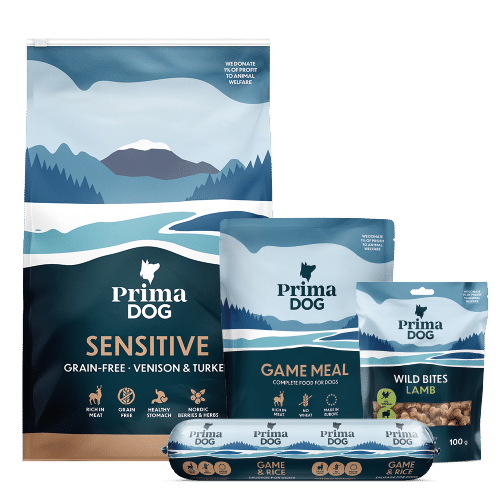
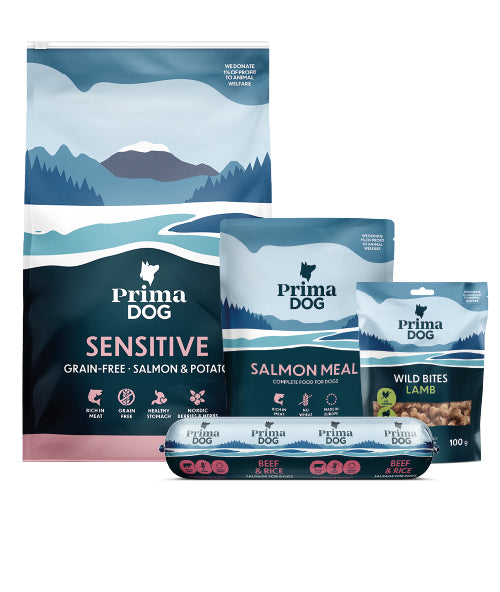
Be surprised by the grain-free range of Prima Diervoeding
By choosing a grain-free dog kibble, your furry friend enjoys a healthy diet.
Yet Prima Diervoeding's food is not only known for its low-grain and grain-free composition; our dry and
wet food is above all made with the healthiest ingredients. Moreover, you will find a range of
dog snacks to enjoy (responsibly).