Hypoallergenic dog food for your four-legged friend
There is nothing more annoying than seeing your dog constantly scratching, licking, or biting its coat. It is very likely that your loyal companion suffers from a food allergy or intolerance. However, do not assume this without confirmation; have an allergy test done by your veterinarian.
Have your dog tested for allergies
If the test results show that your dog has a food allergy or intolerance, you will immediately learn which ingredients your furry friend is allergic to. This allows you to start working on a targeted solution right away; searching for food free from the ingredients your dog reacts to. In many cases, that means
hypoallergenic dog food.
What does hypoallergenic mean?
There are three types of hypoallergenic dog food, which we list below:
Food made with hydrolyzed proteins
Have you ever checked the label of your dog food brand? You may have come across the term ‘hydrolyzed.’ You might wonder what ‘hydrolyzed’ actually means. Simply put, hydrolyzed proteins are broken down into small pieces. This way, your dog’s body does not recognize these pieces as a whole (animal) protein. Therefore, the chance that your dog will be allergic to it is very small.
Hypoallergenic dog food based on unique protein sources
Another complicated term, you might think. Fortunately, it’s quite simple; a unique protein source is an (animal) protein that is rarely or never found in dog food and/or snacks. This means there is little to no chance that your furry foodie will have an allergic reaction.
Food based on a single animal protein source
Food consisting of only one (animal) protein source is also hypoallergenic. Since it uses just one type of meat, the chance of an allergic reaction is quite low. This type of hypoallergenic dog food is often used in an elimination diet. This way, you eliminate the (animal) protein sources your dog is allergic to.
What are the symptoms of a food allergy?
A food allergy or intolerance in your dog is unfortunately not always preventable, no matter how much you want to avoid it. However, you can reduce the risk by being aware of symptoms that may indicate a food allergy or intolerance. Keep a close eye on your four-legged friend and watch carefully for the following complaints:
Stomach and intestinal problems
If your dog vomits frequently or has loose stools, this may indicate a food allergy or intolerance. Also, if your little rascal passes a lot of gas, there is a good chance a food allergy or intolerance is involved.
Skin and coat problems
Your dog’s immune system tries to fight the substance that triggers the allergy. This causes inflammatory products in the skin—such as histamine—to be released, which leads to intense itching in the armpits, groin, and paws. Naturally, your dog will scratch or bite to relieve the itch. Unfortunately, this often results in rashes, skin infections, or hair loss.
Recurring ear infections
If your dog frequently scratches its ears or shakes its head regularly, this may indicate an ear infection. Very painful! It is likely your dog will whine when you touch its ears. Red spots or an unpleasant smell around the ears can also point to an ear infection.
Does your dog often suffer from ear infections? This could indicate a food allergy or intolerance; so be sure to watch for this.
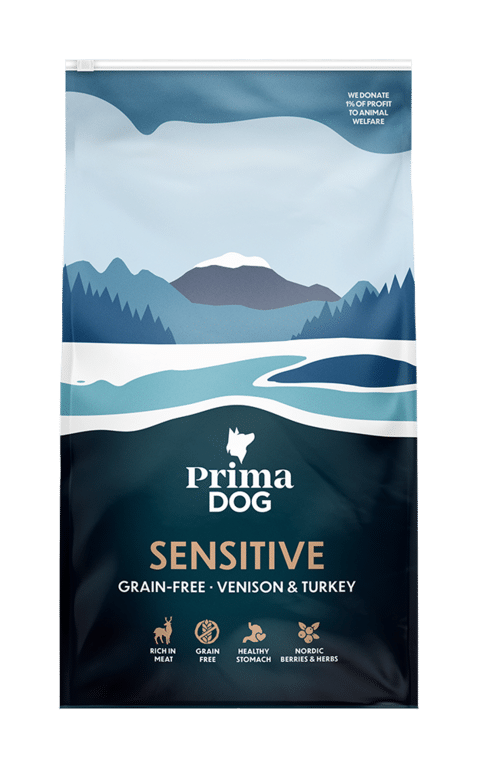
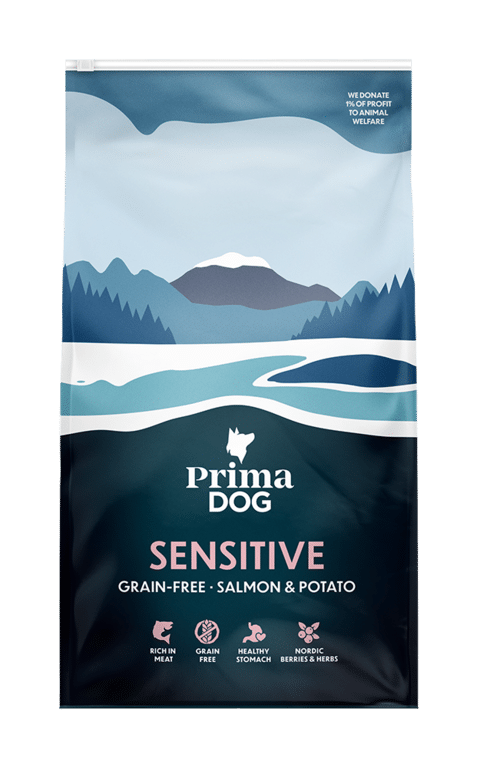
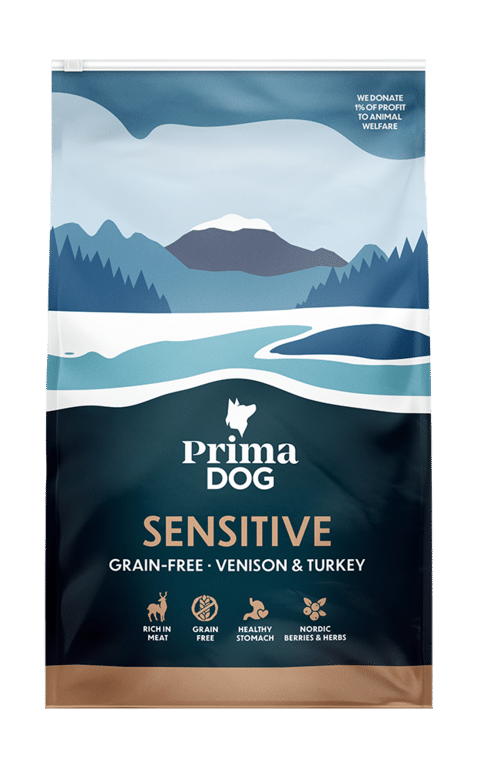
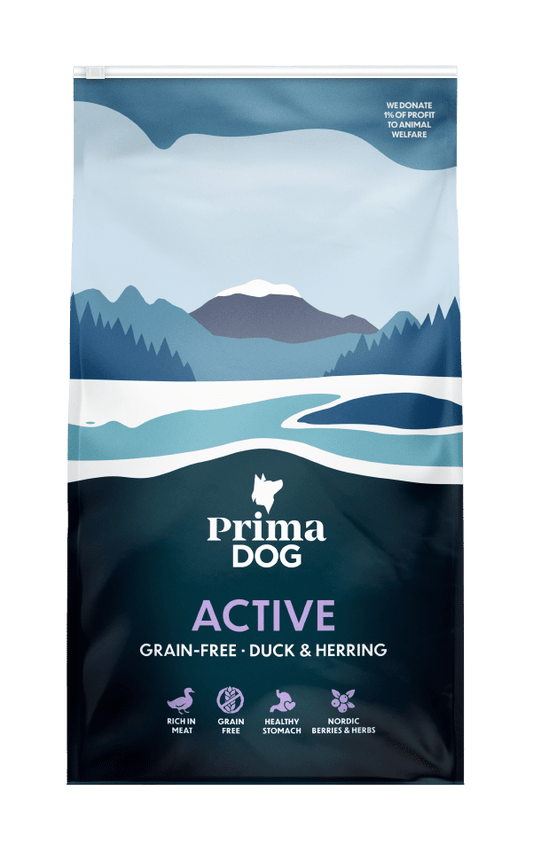
Prima Diervoeding’s hypoallergenic dog food
At
Prima Diervoeding, besides grain-reduced and
grain-free kibbles, you also have the choice of hypoallergenic dog food. Because the kibbles are made with one or two unique protein sources, you can confidently give this food to your sensitive or allergic rascal. Just be sure your dog is not allergic to the other ingredients.